
Designer, decorator
or architect?
Three titles, used almost interchangeably in Ireland. They are not the same thing.
An interior designer changes how a space works. An interior decorator changes how it looks. An interior architect changes the space itself. That distinction holds up well in practice, and knowing which one your project needs will save you a great deal of time before you make a single call.
Book a Consultation
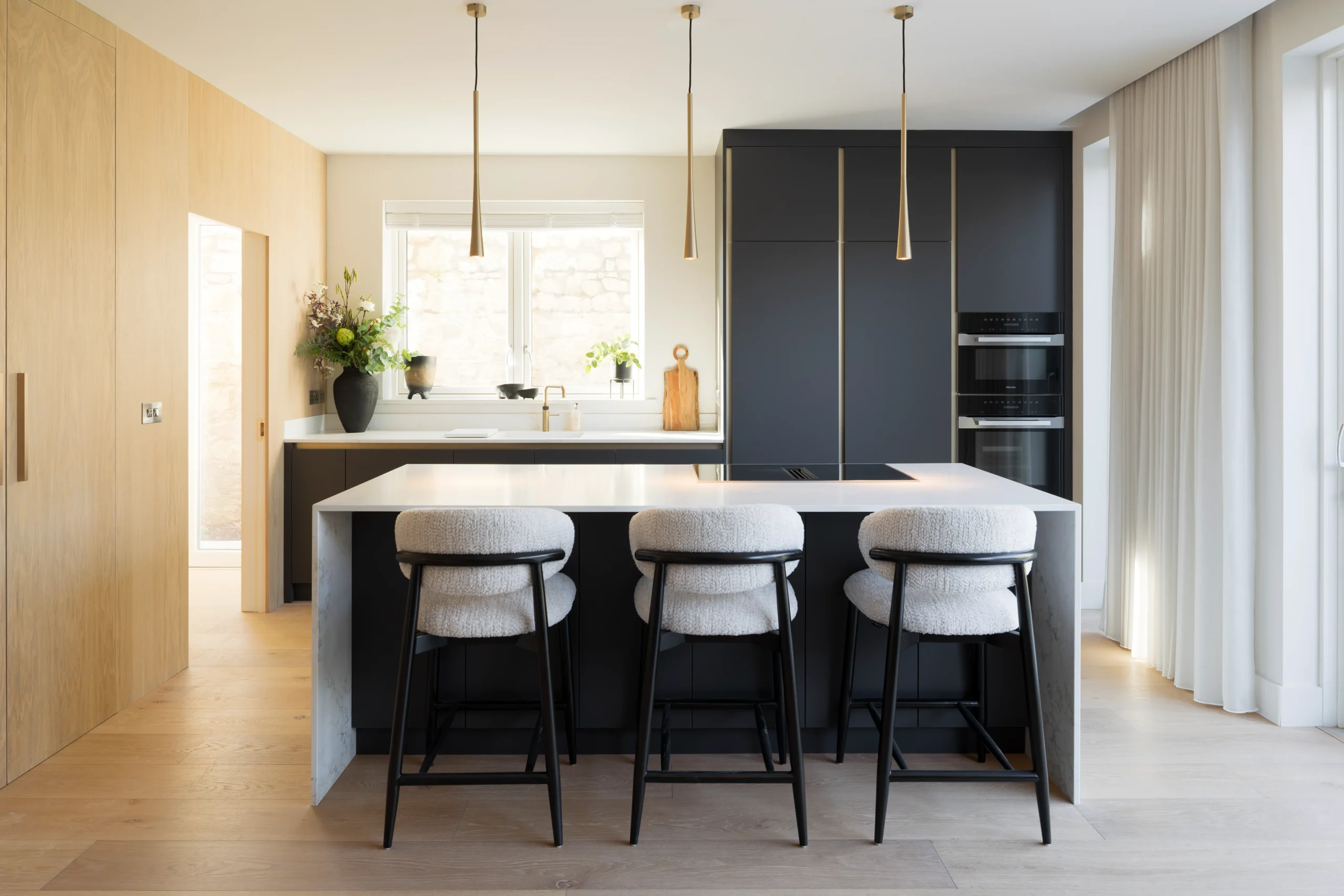
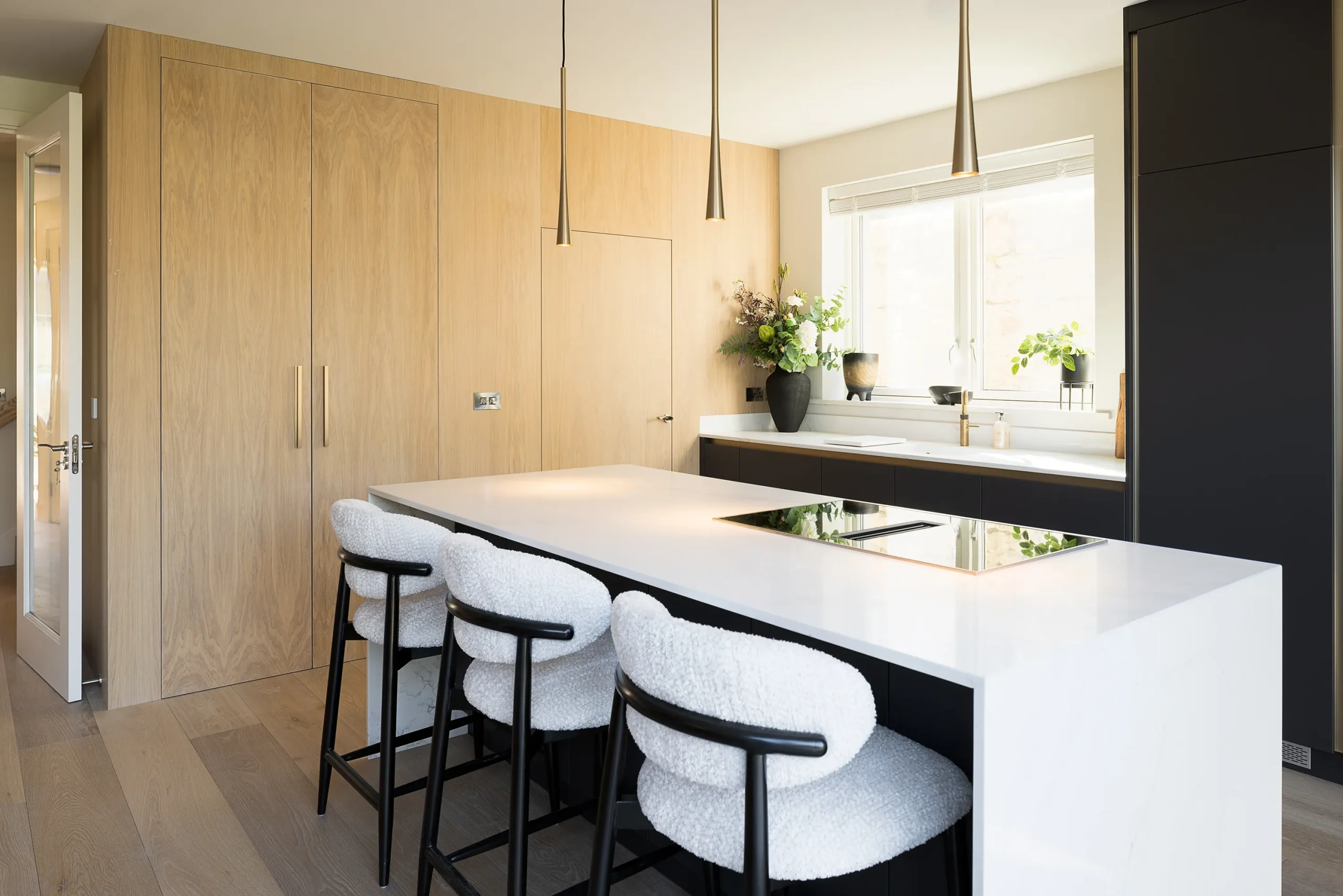
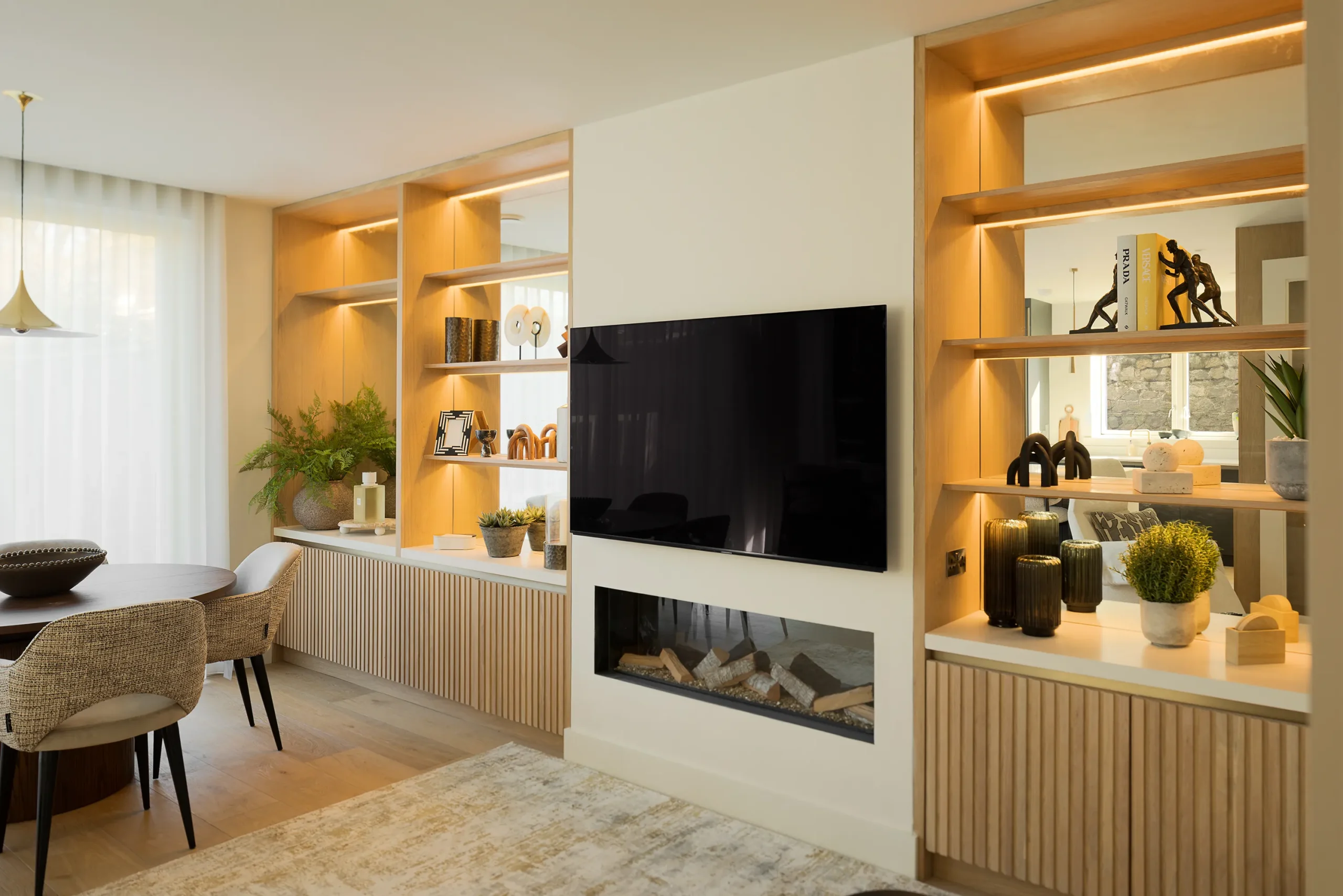
Three roles, one finished room
The clearest test is to ask whether the room itself is changing.
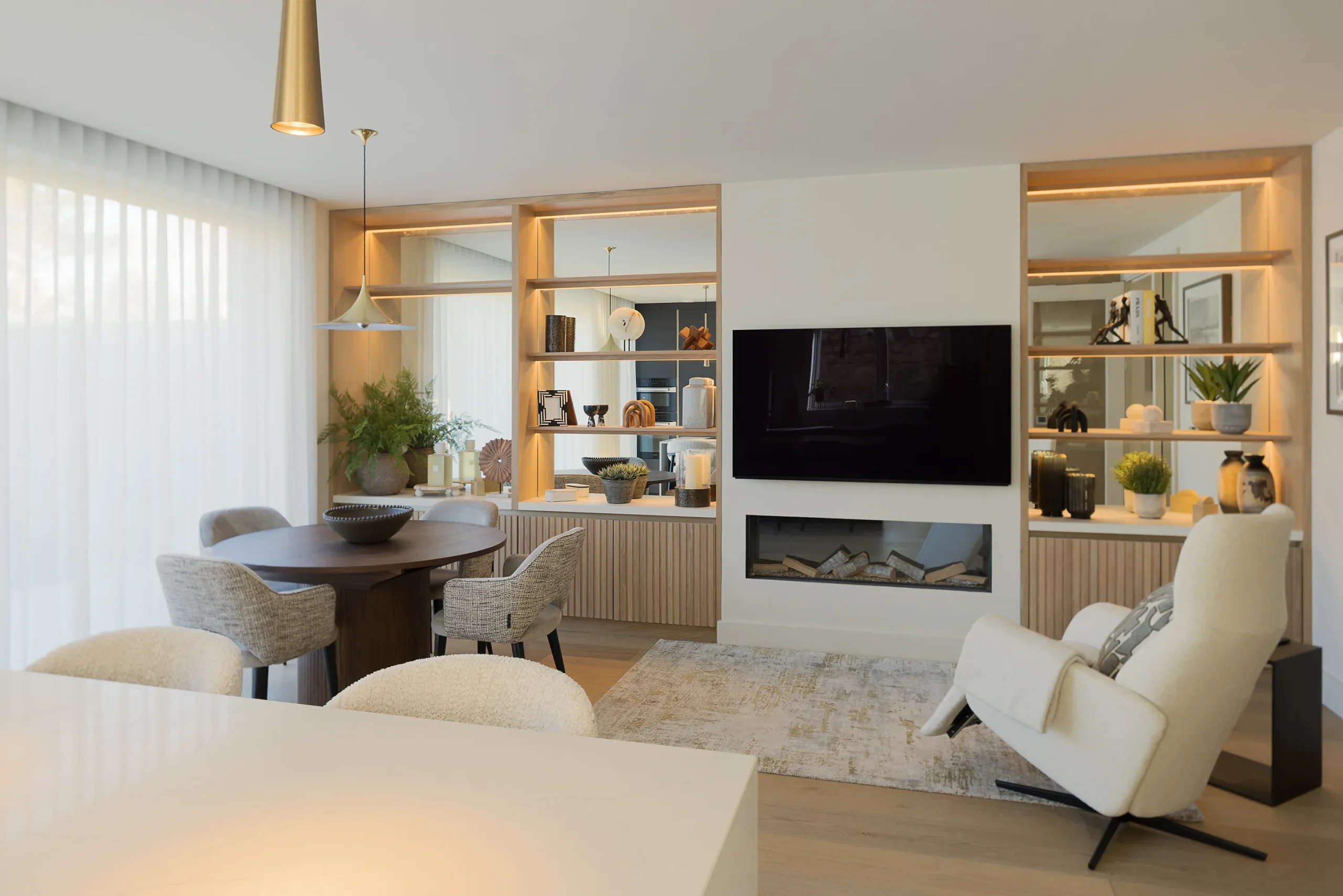
Interior Designer
how the space worksMost of the value is decided long before anything decorative is chosen.
The common assumption is that a designer chooses cushions. In practice the work that matters sits in the layout, the lighting, the storage and the way one room leads into the next. A designer is responsible for making those decisions agree with each other across the whole home, rather than each room being solved in isolation.
- Space planning and how furniture is arranged within a room
- Lighting design across ceiling, wall, floor and table level
- Joinery and built-in storage, designed and detailed
- Materials and finishes chosen to work as one scheme
- Furniture specification and final styling on install
The part that is hardest to do alone is the coordination. Any one of those decisions is manageable. Making thirty of them agree, across several rooms, with different suppliers and different lead times, is where most home projects come unstuck.
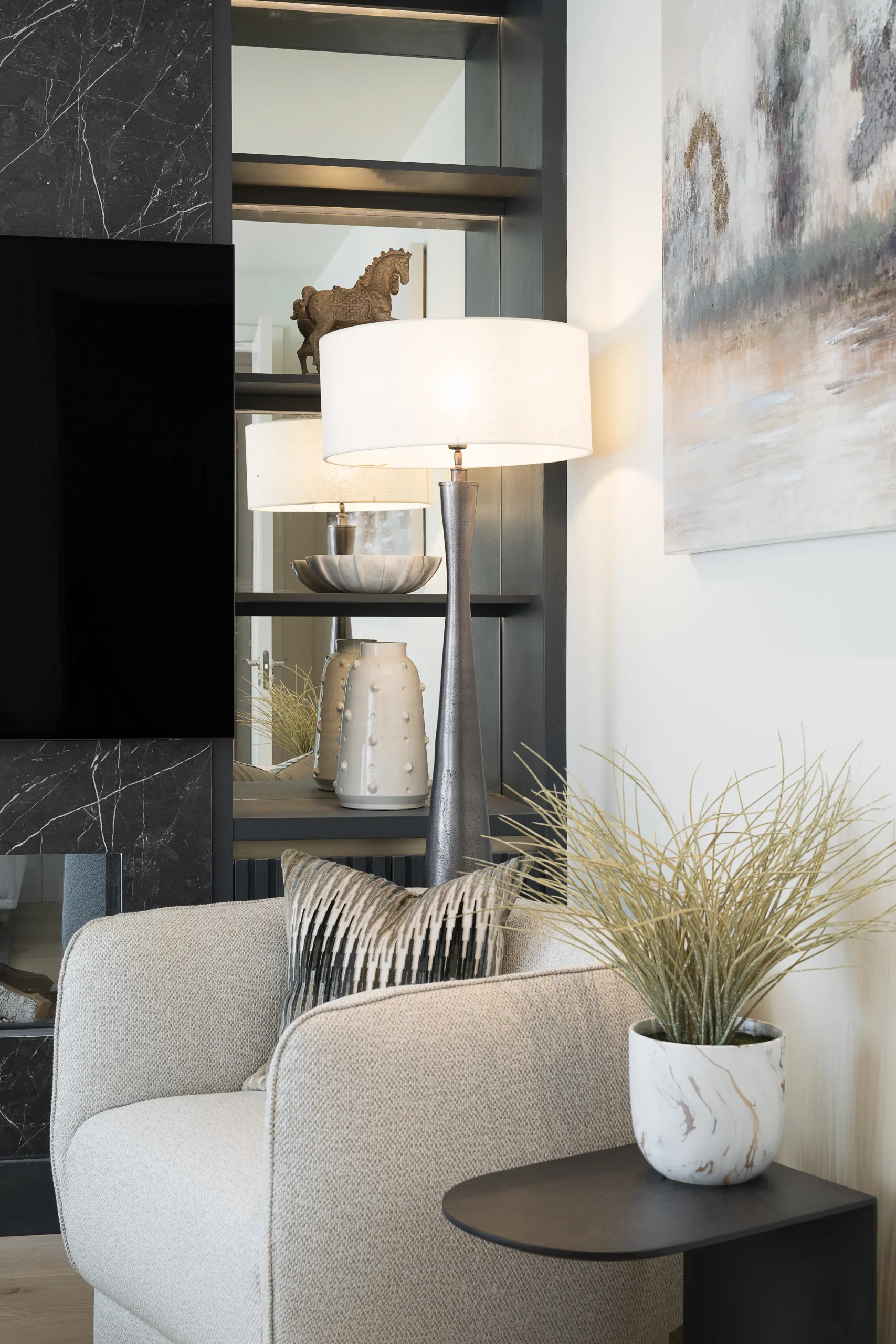
Interior Decorator
how the space looksThe layout already works. The room simply needs to feel right.
Decoration takes the space exactly as it is and shapes the atmosphere within it. No walls move, no sockets are repositioned, no storage is built in. What changes is colour, texture, furniture and the way those elements layer together, and for a great many rooms that is precisely the right level of intervention.
“A room that feels wrong is rarely wrong because of one bad choice. It is wrong because ten reasonable choices were made separately.”
One point of confusion worth clearing up. An interior decorator is not the same as a painter and decorator. The trade applies paint, wallpaper and finishes to a specification. The decorator decides what that specification should be. Plenty of projects need both.
Interior Architect
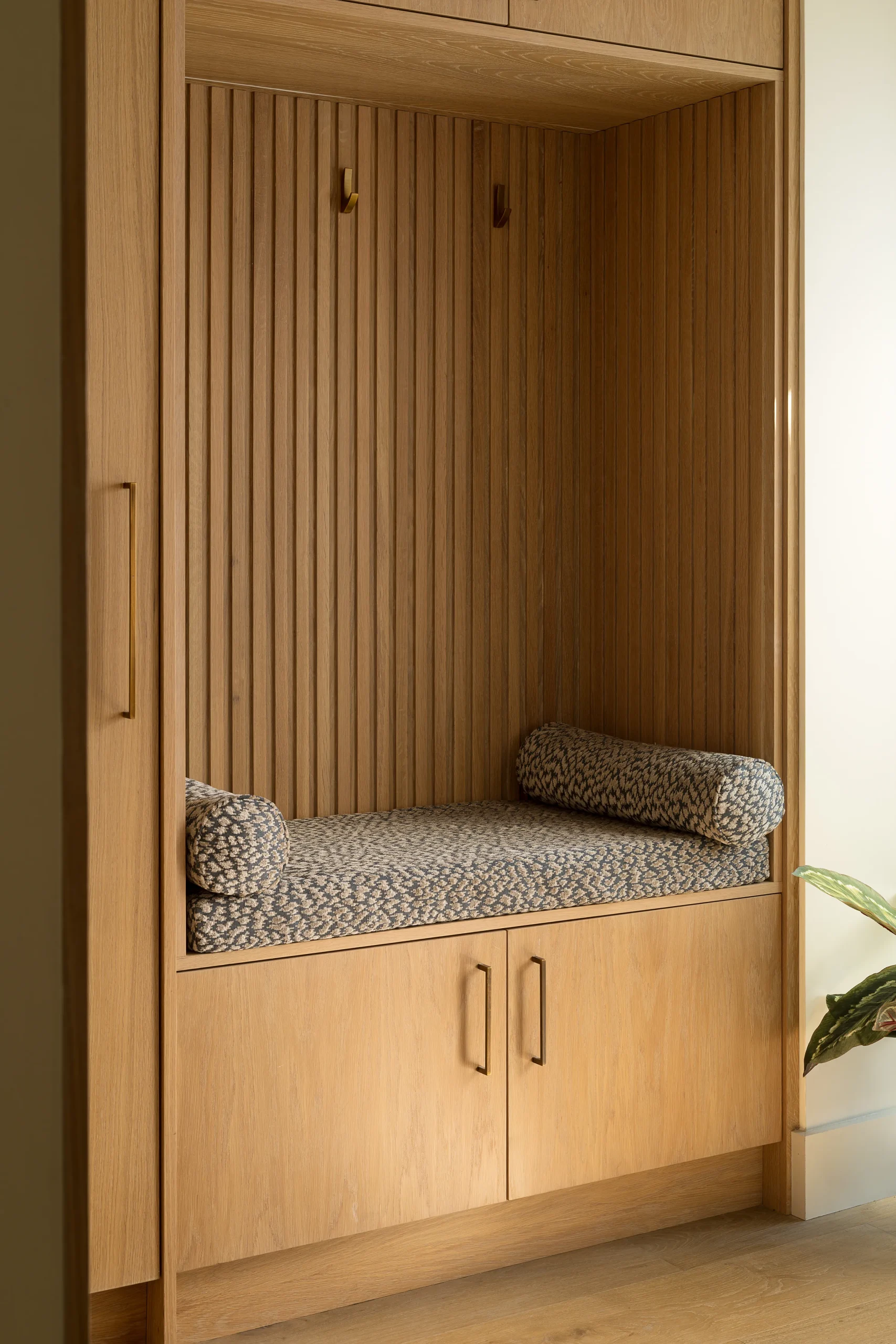
the space itselfWhen the room you have is not the room you need.
Interior architecture reworks the internal structure and spatial arrangement of a building. Removing or repositioning walls, altering openings and levels, reconfiguring how spaces connect to each other. It is the layer that decides what is physically possible, before anyone considers what should go in the room.
One thing worth knowing about the word itself. The title Architect is protected in Ireland under the Building Control Act 2007, with a statutory register maintained by the Royal Institute of the Architects of Ireland. Interior architect is used more loosely, as a description of the work rather than a protected qualification. If your project involves structural change, it is worth confirming who on the team is registered and who is not.
Where the lines fall
Scope overlaps in practice, and many Irish studios cover more than one column.
| Question | Interior architect | Interior designer | Interior decorator |
|---|---|---|---|
| Does the room itself change? | Yes, structurally | Sometimes, non-structurally | No |
| When are they involved? | Before or during construction | Before first fix electrics | Once the space is finished |
| Lighting | Positions within the structure | Full lighting plan and layers | Lamps and shades |
| Storage | Where it can physically go | Joinery design and detail | Freestanding pieces |
| Furniture | Rarely | Specified as part of the scheme | Core of the work |
| Colour and fabric | Rarely | Yes, within the wider scheme | Core of the work |
| Typical trigger | Extension or reconfiguration | Renovation or new build | The room feels unfinished |
Which one do you need?
by situationMatch the role to the work, not to the title.
- Extending or knocking through. Architectural input first. Get the structure and openings right, then bring a designer in on layout, lighting and joinery before first fix.
- Renovating an existing house. Designer territory. Lighting positions, storage, materials and flow are decided early and are difficult to revisit once the walls are closed.
- Furnishing a new build. Designer, and earlier than most people expect. A blank shell needs zoning, lighting and joinery decided before a single piece of furniture is ordered.
- The layout works but the room feels flat. Decoration. Colour, fabric, furniture and layering will do it, with no need to pay for design work you do not require.
- Good pieces that will not sit together. Decoration, and usually solvable without replacing much. A scheme problem rather than a shopping problem.
- Preparing a property to sell or let. Closer to styling, which is a distinct discipline again. Our staging service covers that side.
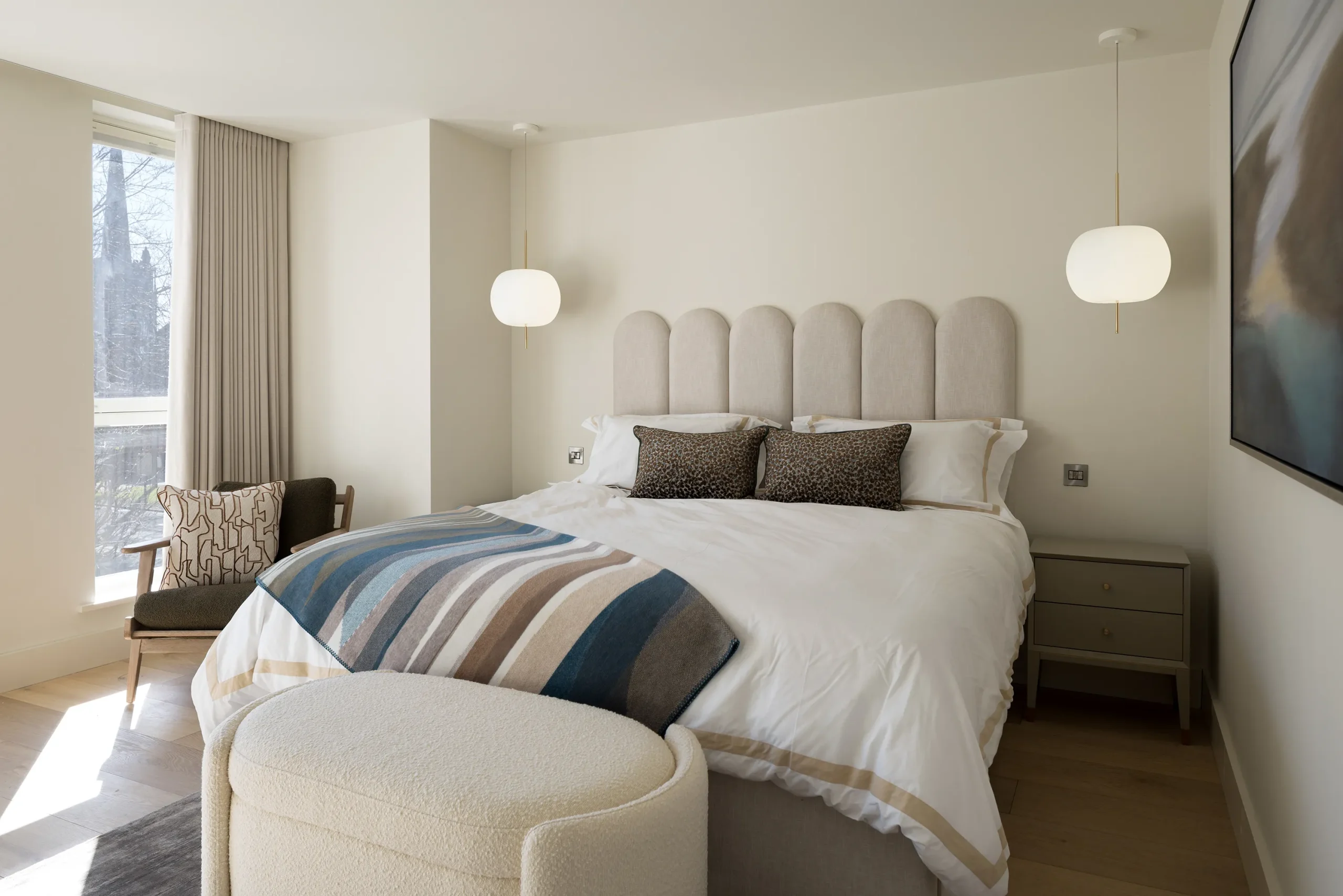
Why the roles
overlap here.
In larger markets these are genuinely separate professions with separate firms. Ireland is small enough that most established studios have developed across the full range instead, and a single project commonly moves from layout drawings through to fabric selection without ever changing hands.
That is generally to the client's advantage. The gaps in a project appear at handover points, where one party assumes another has dealt with something. Fewer handovers means fewer gaps. It does put the responsibility on you to establish what a given studio actually does, so these are the four questions that cut through the job title.
Our Design ServiceDo you produce layout drawings and a lighting plan?
If yes, you are talking to a designer. If the work starts after those are settled, you are talking to a decorator, which may be exactly right for your project.
Do you specify joinery and built-in storage?
Built-in storage is one of the clearest dividing lines between the two roles, and one of the easiest things to ask about directly.
At what stage do you come into a project?
The honest answer tells you where their strength lies. Before first fix and after painting are very different propositions.
Can I see a completed project like mine?
A period house, a new build and an apartment are three different problems. Ask to see the one that matches yours.
Design consultancy and showroom,
under one roof.
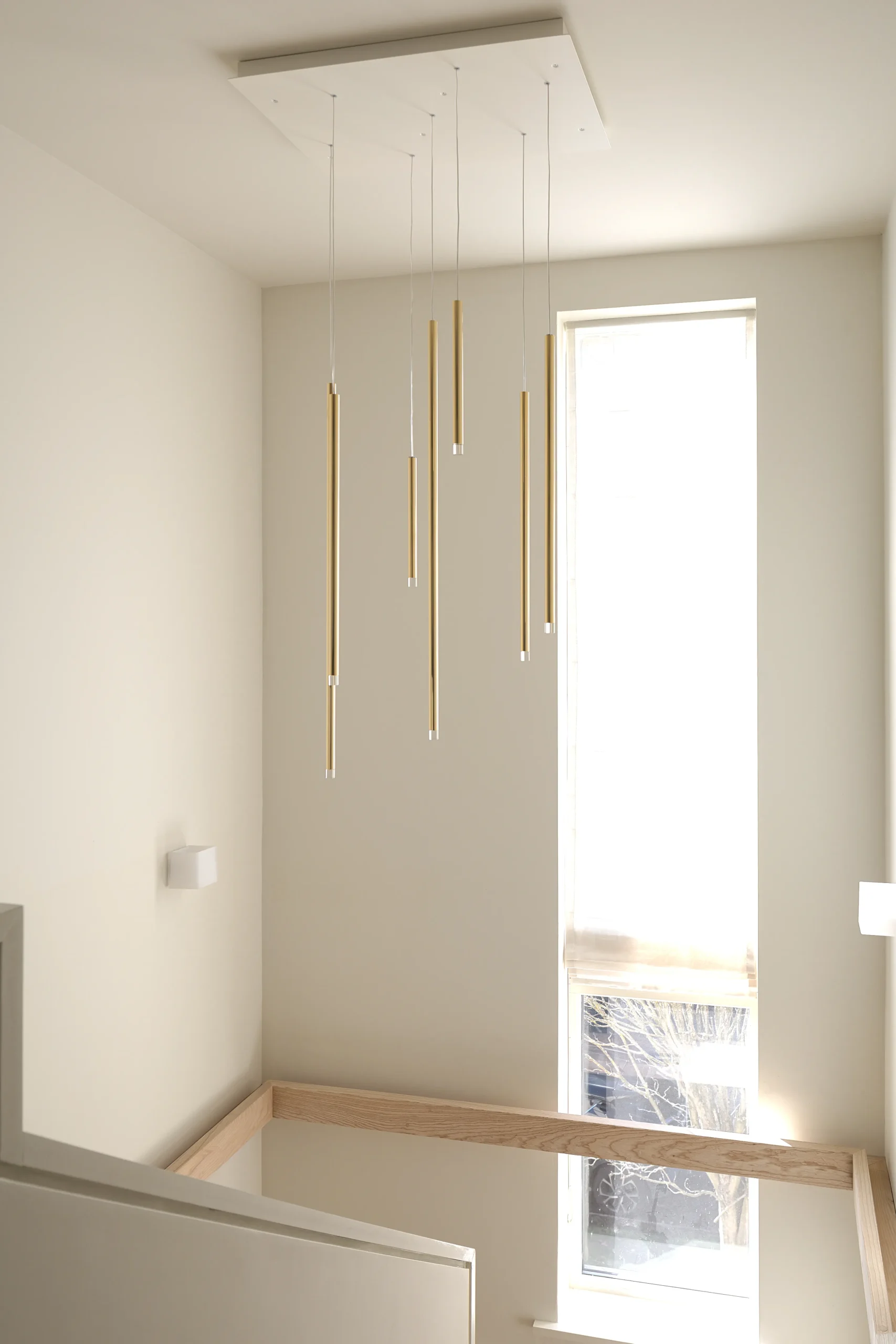
We work as a design consultancy and a showroom together, which means a project can run from space planning and lighting through to furniture, rugs, flooring, paint, wallpaper, fabrics and window treatments with one team accountable throughout.
Some clients use us for design direction alone and buy elsewhere. Others hand over the whole scheme. Both are fine, and the right starting point is a conversation about the room rather than about the job title. See our bespoke interiors work, or how a full scheme comes together in our Blackrock residence project.
Everything people ask
before they call.
An interior designer plans how a space works as well as how it looks, covering layout, lighting design, joinery, materials and finishes. An interior decorator works with the space as it already exists, focusing on colour, furniture, fabrics, window treatments and styling. The simplest test is whether the room itself is changing. If sockets are moving, storage is being built in or the lighting is being repositioned, that is design. If the shell stays as it is and the contents change, that is decoration.
Choose an interior designer if you are renovating, extending, building new or reworking how a room functions, because those decisions are made early and are difficult to revisit later. Choose an interior decorator if the layout already works and the room simply needs to look and feel right. Many Irish studios, including Gavelle, offer both, so the more useful question is which level of work your project actually needs rather than which job title to search for.
No, although the terms are often confused in Ireland. A painter and decorator is a trade that applies paint, wallpaper and finishes to a specification. An interior decorator is a design role that decides what that specification should be, selecting the colours, furniture, fabrics and finishes and how they work together. Some projects need both, with the decorator setting the scheme and the painting and decorating trade carrying out the work.
Interior architecture refers to reworking the internal structure and spatial arrangement of a building, including removing or repositioning walls, altering openings and reconfiguring how spaces connect. The title "Architect" is protected in Ireland under the Building Control Act 2007, with a statutory register maintained by the Royal Institute of the Architects of Ireland. "Interior architect" is used more loosely as a description of the work, so if structural change is involved it is worth confirming who on your team is registered.
Yes, and in Ireland most established studios do. The roles sit on a continuum rather than in separate boxes, and a single project commonly moves from layout and lighting decisions through to fabric and styling choices. Using one team across both means the early decisions and the final finishing decisions are made by people who understand the whole scheme, which is usually where the difference in a finished room shows.
Ask directly whether the studio produces layout drawings and a lighting plan, or whether their work begins once those are already settled. Ask whether they specify joinery and built-in storage. Ask to see a completed project of the same type as yours, whether that is a period house, a new build or an apartment. The answers tell you far more than the job title on the website, since designer and decorator are used loosely across the Irish market.
Describe the room.
We will tell you what it needs.
Whether that turns out to be a full design scheme, a decorating direction or simply a second opinion, the first conversation is the same.